
Alex Duvan, one of the “Little Patuxent Review’s” board members, has published his fifth novel, “The Last Patient.” We recently interviewed Alex, who writes under the pen name Tudor Alexander, about his life as a writer. Alex grew up in Romania, immigrating to the US in 1977.
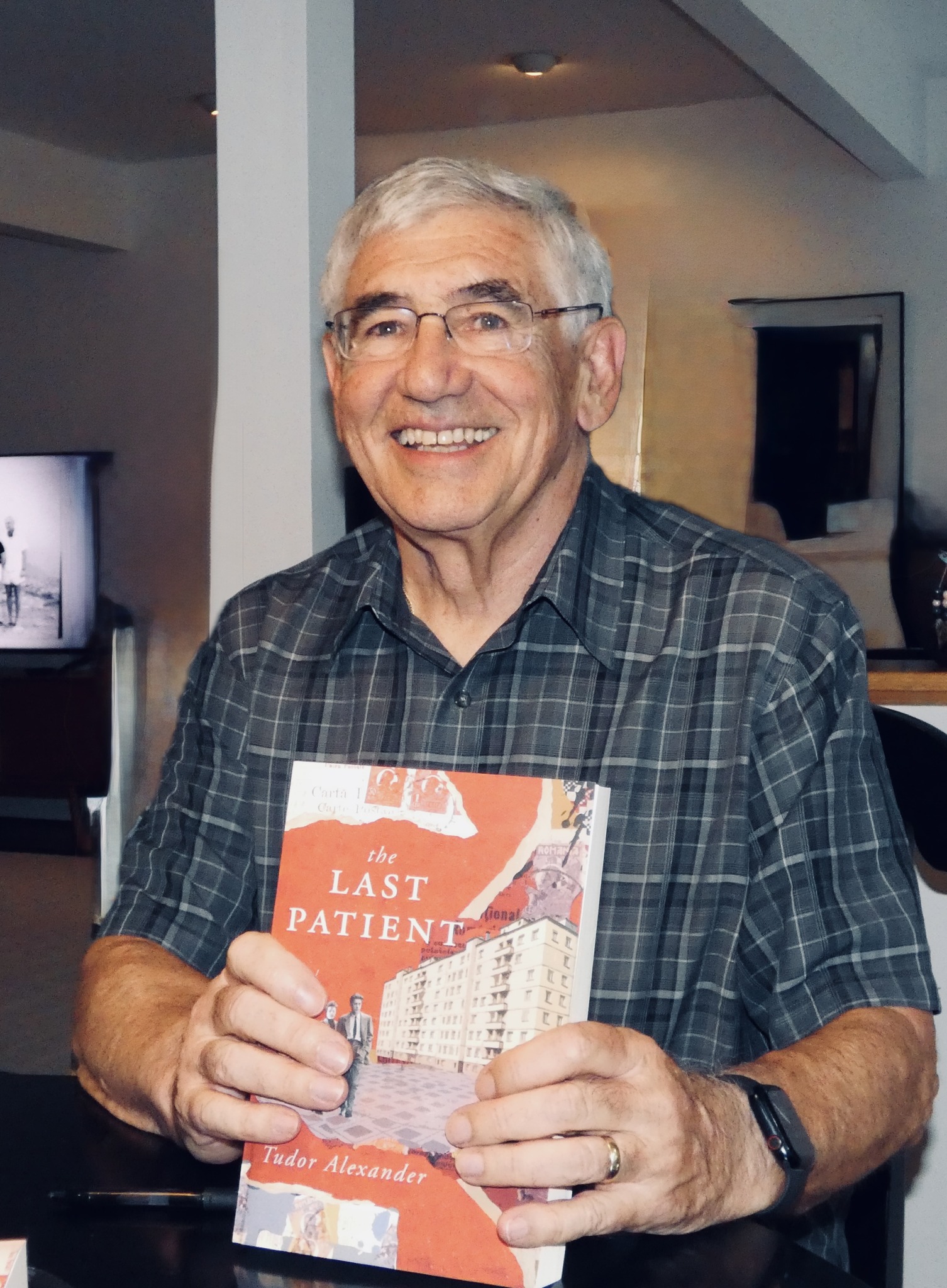
You’re the sort of fellow, Alex, whom I see as a real writer, the kind who writes every day and who has published quite a bit of your work. So what drives you to write fiction?
I started writing in high school. I don’t know why—maybe to impress my friends, who, at the time, read a lot. Literature (classical literature that is, since modern western literature was severely censored) was a silent way of staying to the side and showing your intellectual scorn. I attended literary workshops and published my first short story in a well-known Bucharest literary magazine at age 18. From that time on, the writing and publishing bug never left me.
I came to New York in 1977, as a political refugee, and mastering a second language made writing more difficult, but since the desire was there, I stood no chance. After several years, I started writing again, first in Romanian and then in English. Today I write every day, and I am very happy that I didn’t give it up.
You’ve written many titles before this one, what is the moment when you realized a page or a few have turned into an idea and from there a book?
I never start from a page or a few pages. They come later. First, I get the idea—from something I hear, or experience. The idea perseveres in my mind, changes, gets postponed or forgotten, reappears, grows, and eventually becomes an obsession. The idea is not a plan. It is a suggestion, a ghost-like silhouette in the twilight between me and a blank page or the computer screen. I start writing and as I correct and rewrite, the opening paragraph materializes. Like a lighthouse, like a musical chord, like a mountain trail. I don’t know yet where it leads, but I know that a short story or a novel is being born.
Yet a novel is more than one idea, one paragraph, or a page. It is the result of thousands of hours of work. And it always involves more than the writer. My wife and my friends have read my manuscript and have given me suggestions. Three developmental editors, one copy editor and a proofreader reviewed my book, so that when it came out it was the best it could be.
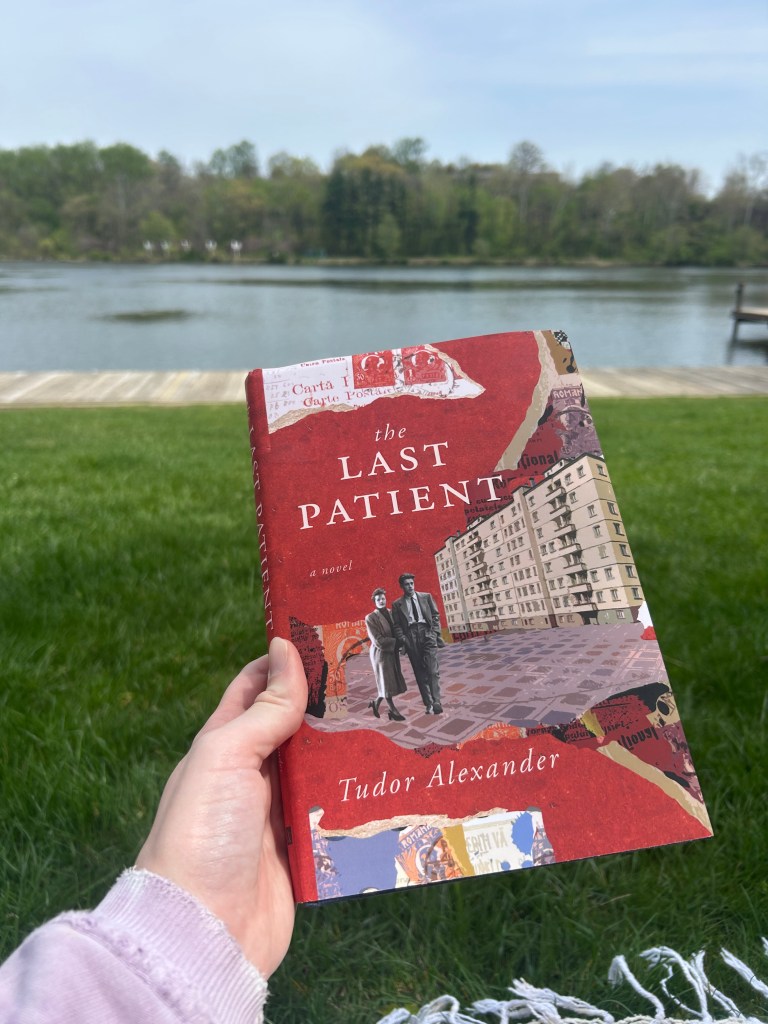
What was your inspiration for “The Last Patient?”
The story of my family has been one of immigration and change. If I follow the roads my ancestors took, I find at least one country change per generation, perhaps several. The cause of the change is opportunity, an oppressive political system, and war. Each change brings with it the hardship and joy of a new life and the sorrow for what is left behind, lost but never to be forgotten. Survival, fear of the unknown, love, and hope unite in an epic and universal way. In a sense, this is the story of my new country, the United States.
I’ve always wanted to write this novel about my family—my most important work so far. This idea became the obsession that lasted my entire adulthood. But I waited for the opportune moment to write it, when I had reached the maturity and understanding, and I felt ready for it.
There is a complementary novel in the works—the story of my wife’s family.
What or who kept you writing?
I will quote Walter Mosley. “If you want to be a writer, you have to write every day. The consistency, the monotony, the certainty, all vagaries and passions are covered by this daily reoccurrence. You don’t go to a well once but daily. You don’t skip a child’s breakfast or forget to wake up in the morning. Sleep comes to you each day, and so does the muse.”
I was lucky. I started writing this novel after I ended my regular, daily job, the one that allowed me to pay the bills. My children are adults and have moved out of the house. It was just me and my wife, who understood and supported me. My new status was “retired,” even though I went to work every day. A different work. I went to “my office,” and sat at my computer, for hours on end. Alone. Stubborn. Each sentence, a step forward, each paragraph, a small victory, like the stones forming the pyramids.
“The Last Patient” shifts perspectives and gives perspective to a family whose lives change, move, and ebb with one another and the world around them. Do you feel that writing this book has brought a new perspective for yourself?
Since the novel is inspired by the life of my family, in the beginning I wrote about the family stories I remembered from the time I was growing up. As those vignettes took shape and developed, I modified them to make them fit into an overall story arc. I changed them and added details, in other words, I fictionalized the reality. This is especially true with war scenes (before my time), happenings at work (which I never witnessed), medical details (which I had to learn and research) and the details of my characters’ romantic entanglements (of which my family members never spoke to me). Gaining new perspectives of these moments, crystalized my understanding of them, making the novel more layered and profound. Through this process, I feel that I gained a deeper understanding of who my parents were and how they raised me to be the person I am today.
What was the most important message you hope readers find through reading “The Last Patient?”
I wanted to describe an appealing and unfamiliar world that existed outside the United States. Despite communism, that world was full of loving people, celebrations, and a community of friends. I wanted to depict elements of life under an authoritarian regime, with the reality which unfortunately is also encountered in our country today—banned books, fear of authorities,
controlled speech, spying on citizens, and the haphazard application of laws. I wanted to address immigration, which, especially now, is totally misunderstood.
The novel is about the rise and fall of Kostea Bardu. He is a smart, capable doctor who skillfully adapts to the changing and oppressive realities of Romanian communism, pursues a successful career, and loves his wife and son. But he is an imperfect man, and his shortcomings lead to his gradual downfall. When he immigrates to the United States to be reunited with his son and his son’s family, his hopes for a new personal and professional beginning are dashed by language and cultural barriers. As he struggles to adjust to his new home, he watches helplessly as his wife, the love of his life, the doctor’s last patient, succumbs to cancer. That disease is not something anyone can prevent, but his downfall is complete.
Perhaps we all encounter a last patient in our lives.
An American might ask: Why did it take so long for people in Romania to rebel against the oppressive system?
Indeed, my American friends often asked me why the Romanians didn’t revolt against the communist regime before December 1989. I always felt somewhat ashamed when confronting this question, as if my former countrymen were not as courageous and freedom-loving as other people of the world (actually thousands upon thousands of Romanians did revolt and ended up in prison or dead). I tried to explain that the Yalta Conference divided post-war Europe into spheres of influence and placed Romania under Soviet control, thus making dissent extremely dangerous and downright useless.
Maybe nowadays – a time when we all see billionaires, managers of major corporations, influential law firms and prestigious universities bend over backwards to accommodate the whims of a single person – my American friends begin to understand.
If you’d like to know more about Alex, here’s a link to his website:

