
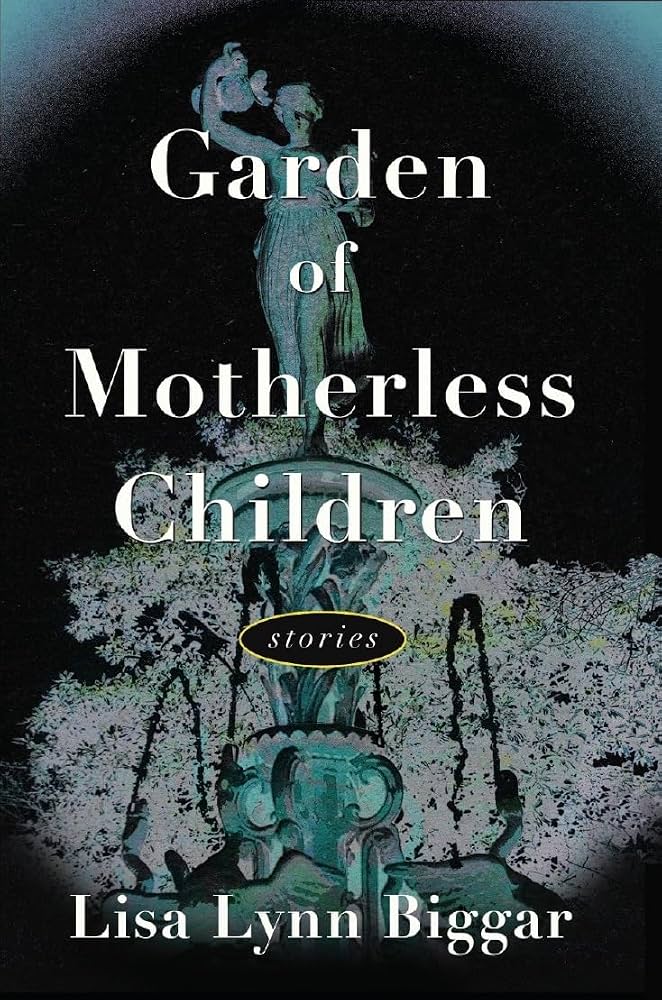
Lisa Lynn Biggar, LPR’s fiction editor for more than ten years, has just published a collection of short stories titled Garden of Motherless Children. It’s a story cycle with all fifteen stories set on Maryland’s Eastern Shore. The publisher is Secant Press.
Lisa describes herself as “a writer, teacher, editor, musician and flower farmer, in various degrees, depending on the season.” She and her husband Don have operated a cut flower farm in the small Eastern Shore town of Galena for twenty-plus years. “In the summer,” Lisa says, “the flowers consume me in all their color and fragrance, but they gradually release me as fall closes in, and my mind turns to writing again. “

LPR: When did you first realize you were a writer?
Well, I loved stories when I was a kid. My parents are both big readers, so I was always surrounded by books. I always insisted on having a story read to me before bed, but what I liked even more was having people make up stories and put me in them as a character. My dad used to do this, and I had a wonderful babysitter who would do this as well. When I was around nine, I started telling my sister, who’s six years younger than me, Rocky and Georgie stories. My aunt had made up these stories about best friends Rocky the little bear and Georgie the little spider. So then I started making up great adventures of these friends for my sister. I would tell them to her in the backseat of my parents’ car when we went on long trips. Sure was better than staring at a phone screen.
In high school I dabbled in poetry, and I was the editor for our school newspaper, but I didn’t really think of myself as a serious writer yet. My first major at the University of Maryland was Journalism, and for my junior year, I went to Hunter College in New York City and interned at MTV’s music news department and Star Hits magazine. That’s when my attention turned heavily to music. I decided I wanted to try to make it in the music business, writing songs and singing. I dropped out of college and starting working in music stores and taking voice and dance lessons and reworking my poetry into lyrics. Not long after, I met my husband Don who plays guitar and writes music, but he needed lyrics. We started writing songs together, and a little more than a year later we were married. We hit the road in our van, playing fairs, festivals, bars, coffee houses.
It wasn’t until we moved out to Arizona where I went back to school at Northern Arizona University, when I was 28, that I made the shift to fiction. I completed my elementary teaching certification out there, but soon realized that wasn’t for me. I needed time to write. And that’s when I discovered that writing was an essential part of my life that helped me figure out the world I was living in, along with myself. I received my Master’s in English with a fiction emphasis from NAU, and then went on to get my MFA in fiction from Vermont College, where I started a novel that I completed afterwards.
LPR: What is your writing discipline and process?
I used to think I needed long stretches of time to sit down and write—four-six hours at a time. I thought I needed time to wind down, to get into the writing, and then fully absorb myself. It did work like that for a while, but the older I got, the busier I got, and I found it harder and harder to find those stretches of time. So, last September, one of our busiest months on the farm, I decided to devote thirty minutes a day to writing in my journals. And I’ve been doing that ever since, for nearly a year now. Finding that thirty minutes can be fun; since I’m not writing on my computer, I can write anywhere: in our van when Don is driving; at a restaurant by the water before we go inside; along a river or creek or moutainside. I like to find a lovely view to write by. It relaxes and inspires me. And I have found that as soon as I open my journal, I am focused and absorbed, picking up where I left off the day before.
As far as my process, I allow my muse or the universe to flow through me in the initial stages of a draft. I’m working on a novella now, and I have nine journals filled with words that have flowed out of me. I wouldn’t say that I wrote them. I just let in the muse and let her roam on the page. I find this part of the process the most magical. I step aside and relinquish control.
I can feel when it’s time to release the muse though. When it’s time to look at what I have and put order to it all. Much of what I have in my journals won’t make it into the novella, but all of the material is necessary to come to know the characters and discover what it is I want to tell, what themes have come to the surface, symbols and motifs. This is the stage I’m at now, mining the raw material and typing up chapters and flash fiction pieces. Then I will put the whole of it together, and revise, revise, revise.
LPR: All the stories in your new short story cycle, Garden of Motherless Children, are set on the Eastern Shore of Maryland, the place where you’ve lived for more than 25 years now. How important is that setting for these stories?
Place is extremely important to me as a writer. I think of it as a living breathing entity. A complex character that is reflected in the people and visa versa. When I think of the Eastern Shore as a character, specifically Kent County, I would describe it as open and vulnerable, non-threatening, quiet, sleepy and soothing with all its forests and waterways, rich with history, multi-generational, haunted by slavery, battles, brothers fighting against brother in the Civil War, wild, rebellious, resistant to change, but now more evolving, eclectic.
I don’t think I could ever authentically write about a place I haven’t spent an extensive amount of time in. I don’t believe I’ve ever set a story in a place I haven’t lived in for at least two years. I didn’t start setting stories on the Eastern Shore until I had lived here for ten years. I grew up on the western shore of Maryland and had only spent time in Rehoboth and Ocean City on the Eastern Shore back then.
LPR: I notice that most of your stories are told in the present tense through the mind of a third-person narrator. Can you tell us why you tend to choose this form of narration?
I like the third person because I started out as poet and songwriter, so my prose is often lyrical and that’s harder to pull off with first person, as people don’t often speak in that manner—although I wish they would. And I like the present tense for the immediacy—it places the reader right there in the scene. I have an unpublished novel that is told in multiple third-person point of view, present tense. A literary agent once asked me to change it all to first person, past tense, but I refused. Someday I’ll get that novel in the right hands.
LPR: George Saunders has defined an ending as “stopping without sucking.” He adds, “If, at one such moment, we stop, we at least can say that we didn’t bore anybody.” Do you have any better tips for ending a story?
A good story should come off as seamless—as one breath. This does not mean that a story must be written all at once. When you are writing that first draft you are tapping into the universe, the muse, and this can be exhausting; so shorter writing periods, I believe, are more effective than extended sessions. It is important to stay in the dream, to return to that story each day, even if it is just to review what you have already written. Too often stories seem to lose steam, or an ending is tacked on for the sake of ending the piece. In my own writing, I find endings to be the trickiest thing, as they need to come organically from the piece, and this often takes time. Writers are so eager to get that story out there, to hit that Submit button, that they do not give that ending time to manifest. I can’t stress how important it is to give your story time. Worlds are not made in a day.
LPR: If you got to pick one of the 15 stories in your collection to nominate for the Best American Short Stories anthology, which would you pick? Why?
That’s like asking a mother to choose her favorite child, but if I had to choose, I would say “Reenactment,” as I step out of my realism comfort zone into magic realism. And it’s historically rich. It delves into the battle of Caulk’s Field where an Eastern Shore militia unit sent the British packing during the War of 1812. The British said they came across a “mighty force of many,” but it was only around 150 local boys, most using their own guns, hunting rifles, and blunderbusses. It also has spiritual elements, touching on reincarnation and is quite an emotional and enlightening journey for the main character, and I think for the reader as well, ending on a note of hope and promise.
When you were writing these stories, did you set out to write a story cycle along the lines of Elizabeth Strout’s Olive Kitteridge? I ask because some characters keep popping up. The woman named Jessie is the protagonist of the first story and also 20 years later in the final story; she appears in two other stories as well.
I knew I wanted to do something like Winesburg, Ohio, the 1919 short story cycle by Sherwood Anderson where all the stories are set in that town with recurring characters. What happened more organically for me was the connecting themes and symbols of my stories. I read Olive Kitteridge by Elizabeth Strout along the way—that cycle has more of a connecting plot than Winesburg Ohio and my book, and more of a main character, but I saw the similarities in the recurring characters and themes and single setting. And I’m sure I was influenced by James Joyce’s Dubliners. There really aren’t that many short story cycles out there that I’m aware of. Recently, I read Ghostroots by Pemi Aguda with all the stories set in Lagos, Nigeria, with connecting symbols and themes. And Guatemalan Rhapsody is on my shelf to read with all the stories set in Guatemala.
LPR: As you’re certainly aware, publishers prefer novels to short stories because they usually sell better. Do you have a sense of why your writing takes the less commercial path?
Each morning I ask the universe to help me create poignant works of art that radiate out into the world to make it a kinder, gentler, more enlightened and insightful place. I honestly see that as my main purpose in life. When I leave this world, I want to know in my heart that I at least tried to make this world a better place. It has nothing to with making money. Would it be nice? Of course. But I don’t think about that when I write. I don’t think about the marketing aspect of writing until the work is complete.
As far as the form, I believe content dictates form, the nature of the material lends itself to a specific, organic form. For my novella-in-flash, Unpasteurized, I knew I wanted to tell very short, poignant stories based of my experiences growing up on my grandparents’ dairy farm in Pennsylvania, weaving in my grandmother’s stories. Since the stories were chronological, together they comprised a novella. The novella-in-flash form was the perfect vehicle for this. And a short story cycle was the perfect vehicle for Garden of Motherless Children, as I wanted to explore the setting and diverse characters of the Eastern Shore of Maryland, specifically Kent County, without the demands and constraints of a running plot.
LPR: What writers are you drawn to?
I’m very much drawn to the work of Virginia Woolf—I love the lyricism of her prose, the blending of time, and stream of consciousness. And I admire the work of Milan Kundera, Marguerite Duras, and Anais Nin for similar reasons. Milan Kundera and Virginia Woolf use interludes in their work that I love. My graduating lecture for my MFA was on interludes in fiction, where an author pauses in the main arch or plot line of the story to focus on a symbol, setting or topic. In Moby Dick it was a long chapter on the classification of whales, and in Virginia Woolf’s novel, To the Lighthouse, Woolf spends one chapter mid-way through the book, personifying an ancestral vacation home. Charles Baxter’s novel, The Feast of Love, has always been one of my favorites. I love the multiple points of view in that novel and the way he writes himself in as one of the characters.
LPR: You’ve been the Little Patuxent Review’s fiction editor for 10 years and a reader of submissions for three years before that. How has ingesting so many works of short fiction affected your own writing?
I can’t recall any specific stories that gave me pause and made me rethink how I approached my craft. Although there was that one with a dragon living in the basement of a house in the boiler room . I am a realist with my fiction, once in a blue moon, venturing into magic realism, and I don’t really see that ever changing, but it’s nice to see all the different ways writers come to the page, and I’m sure that does affect me subconsciously more than I realize. Reading so many varying viewpoints certainly has broadened my perspective on the world and has opened my mind to different styles and types of narration.
LPR: When reading manuscripts, what do you look for most in a story?
First and foremost, I would say the language of the piece. I love lyrical prose, poetic, rhythmic prose. And if it’s first person, I love a voice that is engaging and draws you into their inner world. I’m far less interested in the actions of characters than in the meanderings of their minds. That’s not to say I don’t appreciated a skillfully plotted story, but the story must also have strong language, characterization, imagery, dialogue. Too often it seems that the plot is all that matters to a writer—the getting from point A to B, often with a shocking, or not so shocking twist. But it’s what occurs along the way and how it manifests in and changes the characters that truly matters to me.
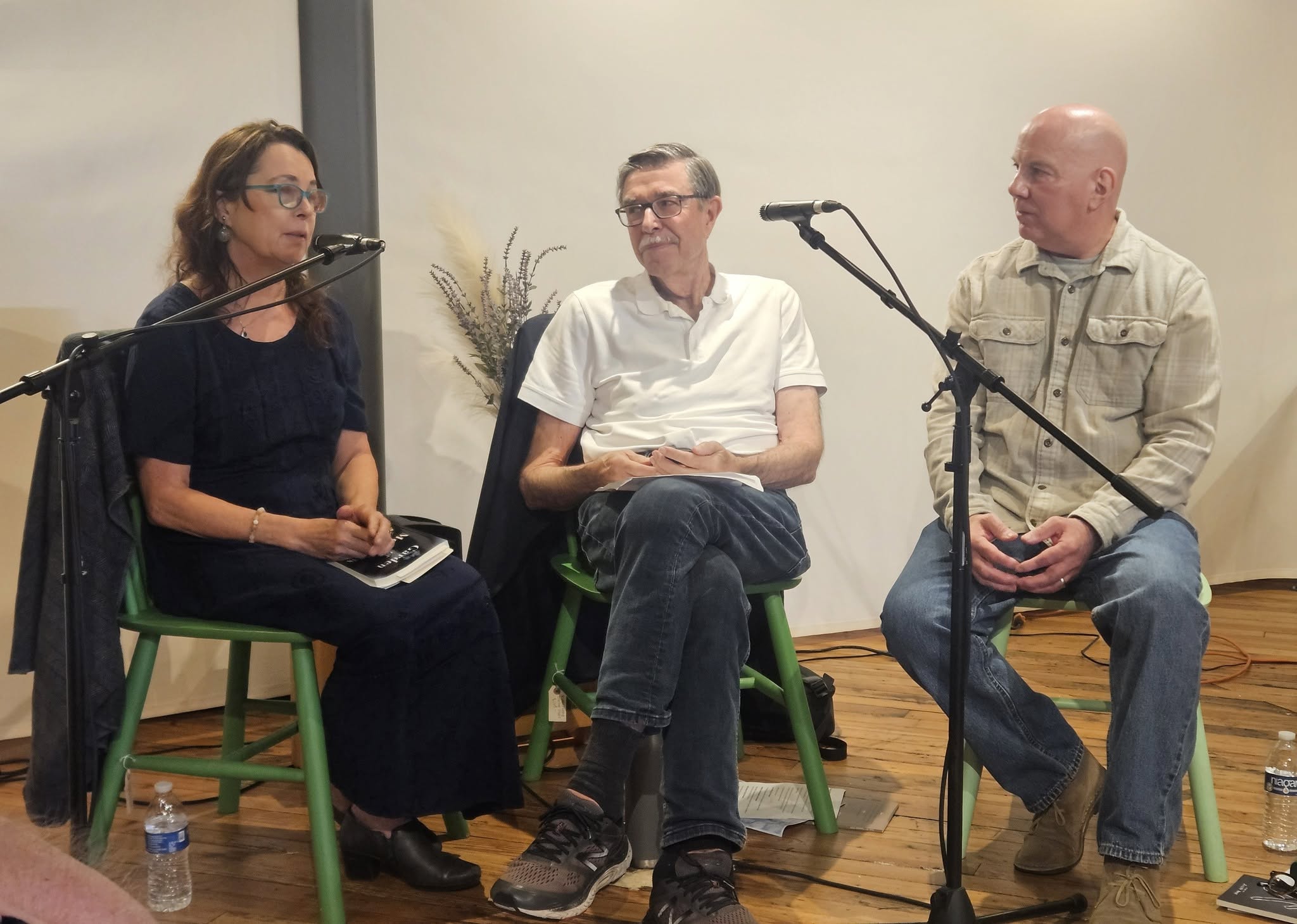
Lisa was interviewed by LPR board member George Clack.

